
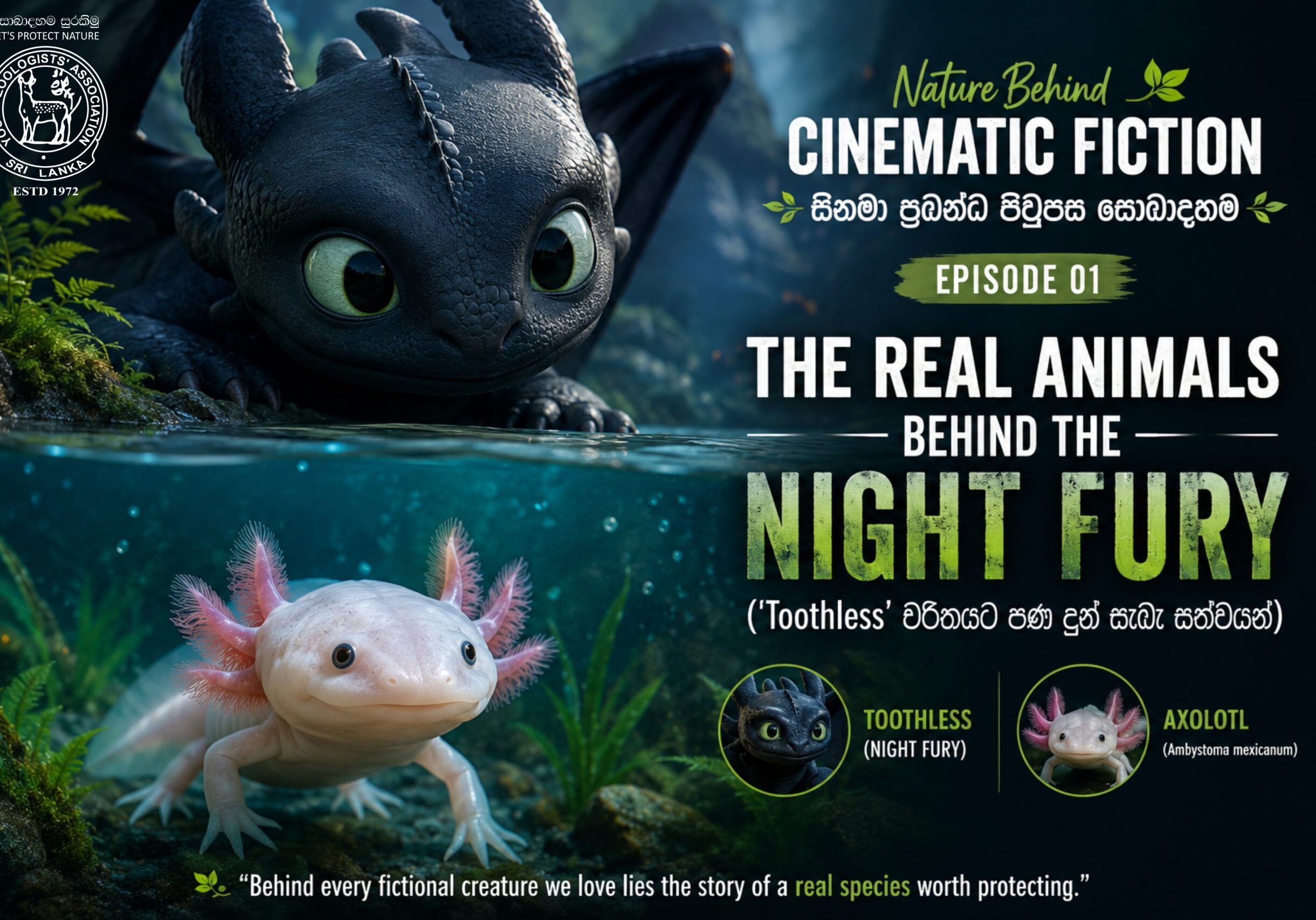
𝐄𝐩𝐢𝐬𝐨𝐝𝐞 𝟎𝟏: 𝐓𝐡𝐞 𝐑𝐞𝐚𝐥 𝐀𝐧𝐢𝐦𝐚𝐥𝐬 𝐁𝐞𝐡𝐢𝐧𝐝 𝐭𝐡𝐞 𝐍𝐢𝐠𝐡𝐭 𝐅𝐮𝐫𝐲 (‘𝐓𝐨𝐨𝐭𝐡𝐥𝐞𝐬𝐬’ චරිතයට පණ දුන් සැබෑ සත්ත්වයා)
“සිනමාවේ අපූරු නිර්මාණ බොහෝවිට ආරම්භ වන්නේ සොබාදහමේ අසිරිමත් නිර්මාණවලිනි.”
මෙම විශේෂාංගය තුළින් සිනමාවේ ජනප්රිය ප්රබන්ධ සත්ත්ව චරිත පිටුපස සැඟවුණු සැබෑ සත්ත්ව ලෝකය සහ ඒවාට ආභාෂය වූ සොබාදහමේ අපූරු නිර්මාණ පිළිබඳව ඔබ සමඟ ගවේෂණය කිරීමට අප බලාපොරොත්තු වෙමු.
𝐇𝐨𝐰 𝐭𝐨 𝐓𝐫𝐚𝐢𝐧 𝐘𝐨𝐮𝐫 𝐃𝐫𝐚𝐠𝐨𝐧 චිත්රපට මාලාවේ “𝐓𝐨𝐨𝐭𝐡𝐥𝐞𝐬𝐬” හෙවත් Night Fury, ලොව පුරා ප්රේක්ෂකයන්ගේ ආදරය දිනාගත් ජනප්රියම ප්රබන්ධ සත්ත්වයන්ගෙන් එකකි. එහි විශාල ඇස්, සෙල්ලක්කාර හැසිරීම්, බුද්ධිමත් ප්රතිචාර සහ සුමට පියාසර කිරීම නිසා Toothless අපට සැබෑ සතෙකු මෙන් දැනේ. හුරතල් මුහුණේ ප්රකාශන සහ ආකර්ෂණීය හැසිරීම් හේතුවෙන් මෙම සත්ත්වයා ලොව පුරා බොහෝ දෙනාගේ ආදරයට පාත්ර වී ඇත.
මෙය අහඹු සිදුවීමක් නොවේ. DreamWorks Animation හි නිර්මාණ ශිල්පීන් Toothless නිර්මාණය කිරීමේදී සැබෑ සත්ත්ව විශේෂ කිහිපයක ලක්ෂණ එකට එක්කරමින් ස්වභාවිකත්වය රැකගත් සිනමාරූපී චරිතයක් බිහි කළහ.
𝐓𝐨𝐨𝐭𝐡𝐥𝐞𝐬𝐬 ගේ මුහුණ පිටුපස සිටින සැබෑ සත්ත්වයා
Toothless ගේ මුහුණේ හැඩය සඳහා ප්රධාන ආභාෂය ලැබී ඇත්තේ Axolotl (𝘈𝘮𝘣𝘺𝘴𝘵𝘰𝘮𝘢 𝘮𝘦𝘹𝘪𝘤𝘢𝘯𝘶𝘮) නම් අද්විතීය උභයජීවියෙකුගෙනි.
මෙක්සිකෝවේ Xochimilco ප්රදේශයේ පමණක් ස්වභාවිකව ජීවත් වන මෙම සත්ත්වයාගේ විශාල ඇස්, පුළුල් හිස, වටකුරු මුහුණ සහ නිරන්තර සිනහවක් මෙන් පෙනෙන මුහුණේ හැඩය Toothless ගේ ආදරණීය පෙනුම නිර්මාණය කිරීමට මහත් සේ දායක වී ඇත.
සැබෑ වීරයා – 𝐀𝐱𝐨𝐥𝐨𝐭𝐥
Axolotl යනු ලොව විශ්මයජනකම උභයජීවීන් අතරින් එකකි.
අතක් හෝ පාදයක් අහිමි වුවද එය නැවත වර්ධනය කරගැනීමේ හැකියාව මෙම සත්ත්වයා සතුය. එමෙන්ම හෘදයේ, කොඳු ඇට පෙළේ සහ මොළයේ කොටස් පවා නැවත වර්ධනය කරගැනීමේ විශ්මිත හැකියාවක් ද ඇත.
මෙවැනි සුවිශේෂී හැකියාවන් හේතුවෙන් ලොව පුරා විද්යාඥයන් වෛද්ය පර්යේෂණ සඳහා ද Axolotl පිළිබඳව ගැඹුරින් අධ්යයනය කරමින් සිටිති.
𝐀𝐱𝐨𝐥𝐨𝐭𝐥 ට අවශ්ය පරිසරය
Axolotl යනු සම්පූර්ණ ජීවිත කාලයම ජලයේ ගත කරන උභයජීවියෙකි. එයට ජීවත් වීමට අවශ්ය වන්නේ පිරිසිදු, සිසිල්, මිරිදිය ජලය, ප්රමාණවත් දියජ ශාක ආවරණයක් සහ සැඟවී සිටීමට සුදුසු ස්වාභාවික පරිසරයකි. මෙක්සිකෝවේ Xochimilco ඇළ පද්ධතිය එවැනි පරිසරයක් සපයන අතර, එහි ජලයේ ගුණාත්මකභාවය සහ ස්වාභාවික ශාක ප්රජාව Axolotl ගේ පැවැත්ම සඳහා අත්යවශ්ය වේ.
නමුත් නාගරීකරණය, ජල දූෂණය, ඇළ මාර්ග වෙනස් කිරීම සහ ආක්රමණශීලී මත්ස්ය විශේෂ හඳුන්වාදීම හේතුවෙන් මෙම ස්වාභාවික පරිසරය ක්රමයෙන් විනාශ වී ඇති අතර, එය Axolotl ගේ වඳවීමේ අවදානමට ප්රධාන හේතුවක් බවට පත්ව ඇත.
සංරක්ෂණ අවධානය
එතරම් විශ්මයජනක සත්ත්වයෙකු වුවද Axolotl අද වඳවීමේ දැඩි අවදානමකට මුහුණ දී සිටී.
IUCN රතු දත්ත ලැයිස්තුවේ තත්ත්වය: අතිශය වඳවීමේ අවදානමට ලක්වූ (Critically Endangered)
ප්රධාන තර්ජන
• ස්වාභාවික වාසස්ථාන විනාශ වීම.
• ජල දූෂණය.
• Tilapia හා Carp වැනි ආක්රමණශීලී මත්ස්ය විශේෂ.
• නාගරීකරණය සහ වාසස්ථාන ඛණ්ඩනය.
අද වන විට Axolotl ස්වභාවිකව හමුවන්නේ මෙක්සිකෝවේ Xochimilco ඇළ පද්ධතියේ ඉතා සීමිත ප්රදේශයක පමණි.
Axolotl සංරක්ෂණය සඳහා ගෙන ඇති ක්රියාමාර්ග
Axolotl සංරක්ෂණය සඳහා මෙක්සිකෝව, විශ්වවිද්යාල, පර්යේෂණ ආයතන සහ ජාත්යන්තර සංරක්ෂණ සංවිධාන එක්ව වැඩසටහන් රැසක් ක්රියාත්මක කරමින් සිටී.
• Xochimilco තෙත්බිම් සහ ඇළ පද්ධතිය ප්රතිසංස්කරණය කිරීම හා ජලයේ ගුණාත්මකභාවය යළි නංවාලීම.
• Axolotl සඳහා අභිජනන (Breeding Programs) වැඩසටහන් ක්රියාත්මක කිරීම.
• අභිජනනය කළ සතුන් සුදුසු වාසස්ථානවලට නැවත මුදාහැරීම පිළිබඳ පර්යේෂණ සහ අත්හදා බැලීම්.
• ආක්රමණශීලී මත්ස්ය විශේෂ පාලනය කිරීම සහ ස්වදේශීය පරිසර පද්ධතිය යථා තත්ත්වයට පත් කිරීම.
• ප්රාදේශීය ප්රජාවන්ගේ සහභාගීත්වයෙන් සංරක්ෂණ හා පාරිසරික දැනුවත් කිරීමේ වැඩසටහන් ක්රියාත්මක කිරීම.
මෙම සියලු උත්සාහයන්ගේ මූලික අරමුණ වන්නේ Axolotl සඳහා සුදුසු ස්වාභාවික පරිසරය නැවත ගොඩනැඟීම සහ එහි වන ගහනය දිගුකාලීනව ආරක්ෂා කිරීමයි.
මෙයින් අපට ඉගෙන ගත හැක්කේ කුමක්ද?
සිනමා නිර්මාණකරුවන්ගේ අතිවිශිෂ්ට ප්රබන්ධ චරිත බොහෝවිට බිහිවන්නේ සොබාදහමේ ඇති සැබෑ ජීවීන්ගේ ආභාෂයෙනි. අප Toothless ට ආදරය කරන තරමටම, ඔහුට ආභාෂය වූ Axolotl වැනි සැබෑ ජීවීන් ආරක්ෂා කිරීමටත් මිනිසුන් වශයෙන් අප වගකිව යුතුය.
Axolotl සංරක්ෂණය සඳහා ක්රියාත්මක කර ඇති වැඩසටහන් අපට වැදගත් පාඩමක් උගන්වයි. වාසස්ථාන ප්රතිස්ථාපනය, විද්යාත්මක පර්යේෂණ, අභිජනන වැඩසටහන් සහ ප්රජාවගේ සක්රීය සහභාගීත්වය යන කරුණු එකිනෙක සම්බන්ධ කරගත් විට වඳවීමේ අවදානමට ලක්ව ඇති විශේෂවල අනාගතය සුරක්ෂිත කළ හැකි බව මෙම උත්සාහයන් මඟින් පෙන්නුම් කරයි.
ශ්රී ලංකාව ද ලොව ඉහළම ජෛව විවිධත්වයකින් යුත් රටක් වන අතර, අපගේ දේශීය උභයජීවීන්, මිරිදිය මත්ස්යයන්, උරගයන් සහ අනෙකුත් වනජීවී විශේෂ රැසක් වාසස්ථාන විනාශ වීම, ජල දූෂණය, ආක්රමණශීලී විශේෂ සහ දේශගුණික විපර්යාස වැනි තර්ජනවලට මුහුණ දෙමින් සිටී.
එබැවින් Axolotl සංරක්ෂණයෙන් ලැබූ අත්දැකීම් ශ්රී ලංකාවේ ජෛව විවිධත්වය වෙනුවෙන් ද ක්රියාත්මක කළ හැකිය. අවදානමට ලක්ව ඇති විශේෂවල වාසස්ථාන ආරක්ෂා කිරීම හා ප්රතිස්ථාපනය කිරීම, අවශ්ය අවස්ථාවලදී ස්ථානීය හා විතැන් සංරක්ෂණ වැඩසටහන් ක්රියාත්මක කිරීම, දිගුකාලීන විද්යාත්මක පර්යේෂණ ප්රවර්ධනය කිරීම, ආක්රමණශීලී විශේෂ පාලනය කිරීම සහ ප්රාදේශීය ප්රජාවන් සංරක්ෂණ කටයුතුවල සක්රීය හවුල්කරුවන් බවට පත් කිරීම වැනි ක්රියාමාර්ග අපගේ දේශීය වනජීවීන්ගේ අනාගතය සුරක්ෂිත කිරීමට මහත් දායකත්වයක් සපයනු ඇත.
ජෛව විවිධත්වය සංරක්ෂණය කිරීම යනු සතුන් පමණක් ආරක්ෂා කිරීම නොව, පරිසර පද්ධතිවල සෞඛ්යය, ස්වාභාවික සම්පත් සහ අනාගත පරපුරට උරුම වන අපගේ ස්වභාවික උරුමය ද සුරැකීමයි. සොබාදහමෙන් ආභාෂය ලබන නිර්මාණ පවතින තාක්, එම ආභාෂයට ජීවය දෙන සැබෑ සත්ත්ව විශේෂ ද පවතින බව සහතික කිරීම අප සැමගේ වගකීමකි.
අපට කළ හැක්කේ…
 වඳවීමේ අවදානමට ලක්වූ සත්ත්වයන් පිළිබඳ දැනුවත් වීම හා දැනුවත් කිරීම.
ස්වාභාවික වාසස්ථාන සංරක්ෂණයට සහාය වීම.
වන සතුන් නීති විරෝධී ලෙස සුරතල් සතුන් ලෙස මිලදී ගැනීමෙන් වැළකීම.
සොබාදහමට ගරු කරන සහ ජෛව විවිධත්වය අගය කරන සමාජයක් ගොඩනැගීමට දායක වීම.
“අප ආදරය කරන සෑම ප්රබන්ධ සත්ත්වයෙකුම පිටුපස, ආරක්ෂා කළ යුතු සැබෑ සත්ත්වයෙකුගේ කතාවක් සැඟවී ඇත.”
ශ්රී ලංකාවේ හමු නොවන සත්ත්වයෙකු වුවද, එවැනි විශ්මයජනක ජීවීන් පිළිබඳ දැනුම ඔබ වෙත ගෙන ඒමට අප තීරණය කළේ, අප ආදරය කරන සිනමා චරිත සමඟ සම්බන්ධ වූ තොරතුරු මතකයේ රැඳී පවතින බව අප දන්නා නිසාවෙනි.
ඒ අරමුණින් ආරම්භ කරන ලද “සිනමා ප්රබන්ධ පිටුපස සොබාදහම” ලිපි මාලාව තුළින් ලොව ජනප්රිය ප්රබන්ධ සත්ත්ව චරිත සඳහා ආභාෂය වූ සැබෑ වනජීවීන් හඳුන්වා දෙමින්, ඔවුන්ගේ ජෛව විවිධත්වමය වටිනාකම සහ සංරක්ෂණයේ වැදගත්කම පිළිබඳව දැනුවත් කිරීම අපගේ බලාපොරොත්තුවයි.
𝐄𝐩𝐢𝐬𝐨𝐝𝐞 𝟎𝟏: 𝐓𝐡𝐞 𝐑𝐞𝐚𝐥 𝐀𝐧𝐢𝐦𝐚𝐥𝐬 𝐁𝐞𝐡𝐢𝐧𝐝 𝐭𝐡𝐞 𝐍𝐢𝐠𝐡𝐭 𝐅𝐮𝐫𝐲 (𝐓𝐡𝐞 𝐑𝐞𝐚𝐥 𝐀𝐧𝐢𝐦𝐚𝐥𝐬 𝐓𝐡𝐚𝐭 𝐁𝐫𝐨𝐮𝐠𝐡𝐭 ‘𝐓𝐨𝐨𝐭𝐡𝐥𝐞𝐬𝐬’ 𝐭𝐨 𝐋𝐢𝐟𝐞)
“Many of cinema’s most extraordinary creations begin with nature’s own masterpieces.”
Through this feature series, we hope to explore the fascinating connection between popular fictional creatures in cinema and the remarkable real animals that inspired them.
Toothless, the Night Fury from the 𝐇𝐨𝐰 𝐭𝐨 𝐓𝐫𝐚𝐢𝐧 𝐘𝐨𝐮𝐫 𝐃𝐫𝐚𝐠𝐨𝐧 film series, is one of the most beloved fictional creatures in modern cinema. With his large expressive eyes, playful personality, intelligence, and graceful flight, Toothless feels almost like a real animal. His adorable facial expressions and captivating behaviour have earned him the affection of millions of fans around the world.
This is no coincidence. The artists at DreamWorks Animation carefully combined characteristics from several real animal species to create a cinematic creature that feels both magical and remarkably lifelike.
𝐓𝐡𝐞 𝐑𝐞𝐚𝐥 𝐀𝐧𝐢𝐦𝐚𝐥 𝐁𝐞𝐡𝐢𝐧𝐝 𝐓𝐨𝐨𝐭𝐡𝐥𝐞𝐬𝐬’ 𝐅𝐚𝐜𝐞
The primary inspiration for Toothless’ facial appearance is the Axolotl (𝘈𝘮𝘣𝘺𝘴𝘵𝘰𝘮𝘢 𝘮𝘦𝘹𝘪𝘤𝘢𝘯𝘶𝘮), a truly extraordinary amphibian.
Native only to the Xochimilco canal system in Mexico, the axolotl’s large eyes, broad head, rounded face, and seemingly permanent smile contributed significantly to Toothless’ charming and expressive appearance.
𝐓𝐡𝐞 𝐑𝐞𝐚𝐥 𝐇𝐞𝐫𝐨 – 𝐓𝐡𝐞 𝐀𝐱𝐨𝐥𝐨𝐭𝐥
The axolotl is one of the world’s most remarkable amphibians.
It possesses the extraordinary ability to regenerate lost limbs. Even more astonishingly, it can regenerate parts of its heart, spinal cord, and brain. Because of these exceptional regenerative abilities, scientists around the world continue to study the axolotl in the hope of advancing regenerative medicine.
𝐓𝐡𝐞 𝐇𝐚𝐛𝐢𝐭𝐚𝐭 𝐚𝐧 𝐀𝐱𝐨𝐥𝐨𝐭𝐥 𝐍𝐞𝐞𝐝𝐬
The axolotl is a unique amphibian that spends its entire life in water. It depends on clean, cool freshwater, abundant aquatic vegetation, and a natural environment that provides shelter and breeding sites. Historically, the canals and wetlands of Xochimilco in Mexico provided these ideal conditions, with healthy water quality and rich aquatic plant communities supporting the survival of this remarkable species.
However, rapid urbanization, water pollution, modification of canal systems, and the introduction of invasive fish species have severely degraded this habitat. As a result, the loss and deterioration of its natural environment have become the primary reasons for the axolotl’s dramatic decline in the wild.
𝐂𝐨𝐧𝐬𝐞𝐫𝐯𝐚𝐭𝐢𝐨𝐧 𝐒𝐩𝐨𝐭𝐥𝐢𝐠𝐡𝐭
Despite its extraordinary biological abilities, the axolotl is now facing an alarming risk of extinction.
IUCN Red List Status: Critically Endangered
Major Threats
• Destruction of natural habitats
• Water pollution
• Invasive fish species such as tilapia and carp
• Urbanization and habitat fragmentation
Today, wild axolotls survive only within a very limited area of the Xochimilco canal system in Mexico.
𝐂𝐨𝐧𝐬𝐞𝐫𝐯𝐚𝐭𝐢𝐨𝐧 𝐈𝐧𝐢𝐭𝐢𝐚𝐭𝐢𝐯𝐞𝐬 𝐟𝐨𝐫 𝐭𝐡𝐞 𝐀𝐱𝐨𝐥𝐨𝐭𝐥
To conserve the axolotl, the Mexican government, universities, research institutions, and international conservation organizations have implemented a range of initiatives, including:
• Restoring the wetlands and canal systems of Xochimilco while improving water quality.
• Establishing conservation breeding programmes to maintain healthy populations.
• Conducting research on reintroducing captive-bred axolotls into suitable natural habitats.
• Controlling invasive fish species and restoring the native aquatic ecosystem.
• Promoting conservation education and encouraging local communities to participate in habitat protection.
Together, these efforts aim to restore suitable habitat for the axolotl and ensure the long-term survival of wild populations.
𝐖𝐡𝐚𝐭 𝐂𝐚𝐧 𝐖𝐞 𝐋𝐞𝐚𝐫𝐧 𝐅𝐫𝐨𝐦 𝐓𝐡𝐢𝐬?
Many of cinema’s most iconic fictional creatures are inspired by real animals found in nature. Just as we admire Toothless, we also have a responsibility to protect the real species that inspired his creation, such as the axolotl.
The conservation efforts undertaken for the axolotl demonstrate that threatened species can be safeguarded through an integrated approach combining habitat restoration, scientific research, conservation breeding programmes, and the active participation of local communities.
Sri Lanka is also recognized as one of the world’s biodiversity hotspots, with many endemic amphibians, freshwater fish, reptiles, and other wildlife facing threats such as habitat loss, water pollution, invasive species, and climate change.
The lessons learned from axolotl conservation can therefore serve as valuable examples for Sri Lankan biodiversity. Protecting and restoring critical habitats, implementing in-situ and ex-situ conservation programmes where appropriate, promoting long-term scientific research, managing invasive species, and encouraging the active involvement of local communities are all strategies that can strengthen the conservation of our own native wildlife.
Conserving biodiversity is not simply about protecting individual species. It is about safeguarding healthy ecosystems, preserving our natural heritage, and ensuring that future generations inherit the rich biological diversity that inspires science, creativity, and discovery. As long as nature continues to inspire remarkable stories and unforgettable cinematic characters, it is our responsibility to ensure that the real species behind those inspirations continue to thrive in the wild.
𝐖𝐡𝐚𝐭 𝐂𝐚𝐧 𝐖𝐞 𝐃𝐨?
Learn about threatened wildlife and help spread awareness.
Support the conservation of natural habitats.
Never purchase illegally traded wild animals as pets.
Encourage a society that values biodiversity and respects nature.
“𝘉𝘦𝘩𝘪𝘯𝘥 𝘦𝘷𝘦𝘳𝘺 𝘧𝘪𝘤𝘵𝘪𝘰𝘯𝘢𝘭 𝘤𝘳𝘦𝘢𝘵𝘶𝘳𝘦 𝘸𝘦 𝘭𝘰𝘷𝘦 𝘭𝘪𝘦𝘴 𝘵𝘩𝘦 𝘴𝘵𝘰𝘳𝘺 𝘰𝘧 𝘢 𝘳𝘦𝘢𝘭 𝘴𝘱𝘦𝘤𝘪𝘦𝘴 𝘵𝘩𝘢𝘵 𝘥𝘦𝘴𝘦𝘳𝘷𝘦𝘴 𝘰𝘶𝘳 𝘱𝘳𝘰𝘵𝘦𝘤𝘵𝘪𝘰𝘯.”
Although the axolotl is not a species found in Sri Lanka, we chose to introduce this remarkable animal because information associated with popular cinematic characters is often easier to remember and more engaging to learn.
With this objective, Nature Behind Cinematic Fiction is launched as an educational article series by the Young Zoologists’ Association of Sri Lanka. Through this series, we aim to introduce the real wildlife that inspired some of the world’s most iconic fictional creatures while raising awareness about their biological significance and the importance of their conservation.
𝙍𝙞𝙨𝙝𝙖𝙣𝙞 𝙎𝙞𝙡𝙫𝙖